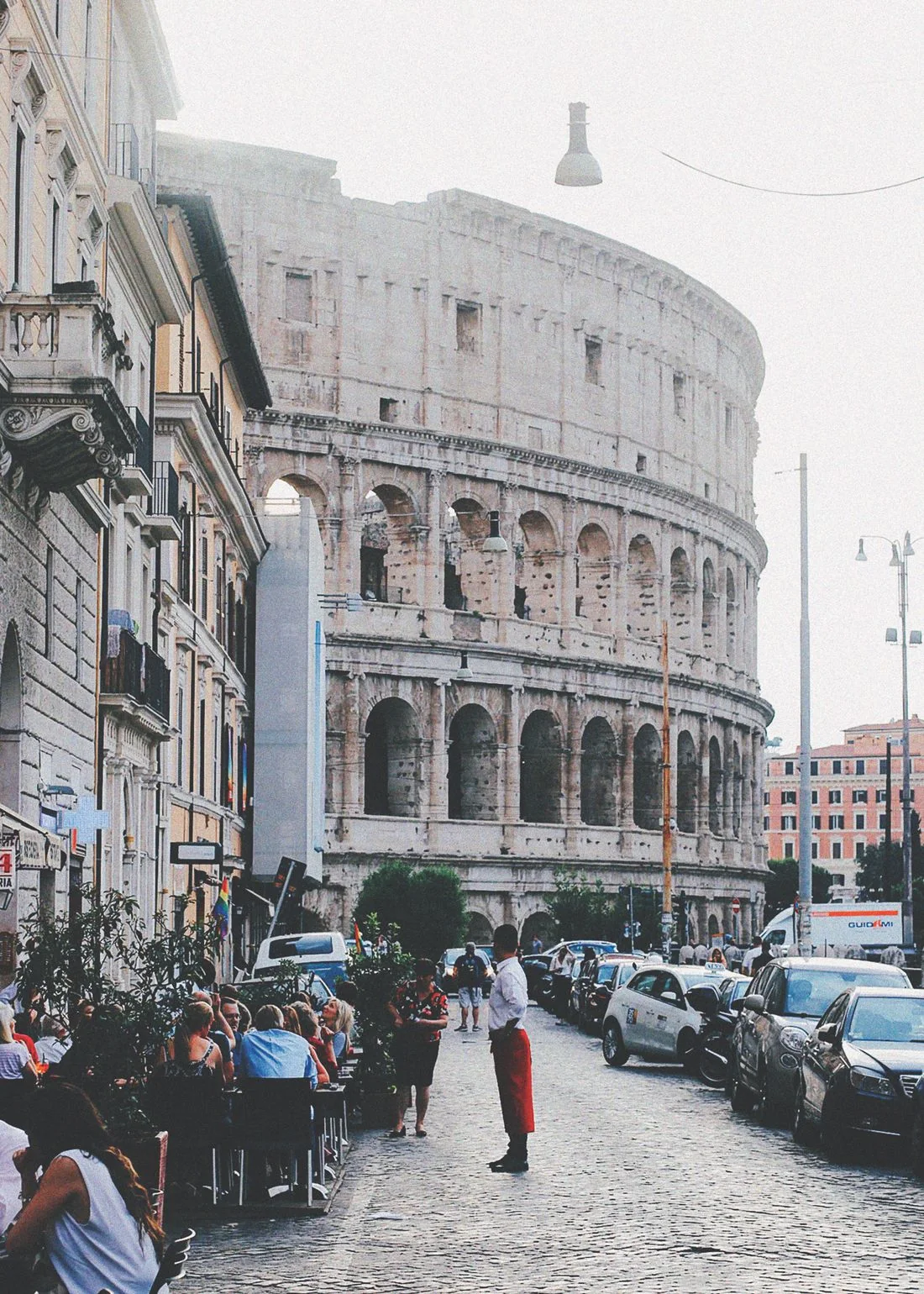
Plan a Rome weekend around comfortable walking, a few considered reservations, and outfits that work from an afternoon piazza to dinner. A compact wardrobe and a geographically sensible itinerary can make a two-night escape feel easier without turning every hour into a booking.
Inside this guide
- Start with two anchors, not a full timetable
- Make your hotel location part of the wardrobe plan
- Pack trousers that enjoy a long lunch
- Treat footwear as an itinerary decision
- Build the evening change into your day bag
- Buy the missing layer with a return plan
- Leave one afternoon deliberately open
- The final suitcase edit
- The shopping shortlist
Start with two anchors, not a full timetable
Imagine arriving on Friday afternoon, spending Saturday between a major sight and neighborhood streets, and leaving after Sunday lunch. Choose one reservation that matters on each full day, then build your walking around it. A route with repeated cross-city journeys can make a weekend feel surprisingly short. Use Turismo Roma, the city's official tourism resource, to investigate attractions and practical information, and confirm ticket arrangements with the attraction itself. Keep the arrival evening flexible enough to absorb a delayed journey. Your first meal does not need to be the most complicated reservation of the trip.
Make your hotel location part of the wardrobe plan
A centrally convenient room can reduce how much you carry, but a hotel that looks close on a map still deserves a route check. Look at the actual walk from transport to the entrance, especially when traveling with luggage. Compare the total room cost, cancellation deadline, and check-in hours rather than the first attractive headline. If returning before dinner is inconvenient, your daytime outfit should already have an evening version. A compact cardigan and one piece of jewelry are easier to carry than a complete replacement outfit. Choose accommodation around your priorities instead of someone else's ideal neighborhood.
Pack trousers that enjoy a long lunch
Try a small wardrobe of straight trousers, a comfortable skirt or dress, two tops, a fine knit, and a forecast-appropriate outer layer. Sit down in every bottom before packing; a waistband that works only when standing is a poor match for travel days and leisurely meals. Choose fabrics you can manage without a full laundry routine. A dark bottom offers flexibility when an outdoor seat or crowded café introduces a small mark. Keep your palette close to what you normally wear, with one color or scarf if you want variety. The goal is several usable combinations, not identical photographs.
Treat footwear as an itinerary decision
A walking day with stone surfaces and plenty of standing calls for familiar shoes. Bring the pair you have already worn for several hours, and test it with the socks you plan to pack. A polished sneaker can suit many casual daytime plans; a supportive flat may work if it is genuinely comfortable for you. Add a second pair only when it solves a real dinner or comfort need. Avoid carrying substantial heels solely because a destination feels glamorous. If an attraction or restaurant has specific clothing requirements, check those directly before deciding that your footwear or outfit is appropriate.
Build the evening change into your day bag
Picture ending an afternoon walk and heading straight to an early dinner. A simple blouse under your cardigan, a small comb, and a lighter lip color may be all the adjustment you want. Keep the main bag comfortable against your coat and easy to close. A crossbody should hold your essentials without forcing the zip, while a foldable tote can carry an extra layer when needed. Do not turn the auxiliary tote into a second permanent handbag. BAGGU's bag collection is a useful place to compare silhouettes, but dimensions and closure style matter more than the color shown in a campaign.
Buy the missing layer with a return plan
If the wardrobe test reveals a gap, describe the function before shopping: a light layer that fits under a jacket, for example, rather than a new Rome outfit. Compare fabric composition, washing instructions, sizing measurements, and the return window. A fine knit from a brand you already wear may be more predictable than an unfamiliar item bought immediately before departure. Allow enough time to try it with every intended outfit. Avoid ordering multiple pieces just to fill spare suitcase space. A purchase earns its place when it helps both the upcoming weekend and ordinary days after you return.
Leave one afternoon deliberately open
A weekend itinerary can contain a meaningful gap without becoming vague. Choose the area you want to explore, save a couple of possible stops, and let energy and weather decide how much you do. An unbooked lunch or a quiet pause is easier when you are not racing to a reservation in another district. If a famous sight is essential, give it the attention and planning it needs rather than squeezing it into that gap. Save relevant confirmations offline, and keep hotel details accessible. Practical preparation lets you improvise with fewer small interruptions once you are out walking.
The final suitcase edit
Lay out the departure outfit separately and count what remains. Two nights rarely require multiple backup versions of every garment. Keep a fresh top, your essential personal items, and one sensible weather contingency; remove the extra dress that has no actual occasion. Leave space for worn clothing and anything you intentionally expect to bring home. Before closing the bag, check your carrier's luggage allowance and the current forecast. Wear the bulkiest useful layer on the journey if that suits conditions. Arrive with a plan you can comfortably carry, then let Rome provide the visual interest rather than demanding it from every outfit.
The shopping shortlist
Compare these starting points against your own itinerary and wardrobe. Check the current listing, materials, measurements, delivery dates and return terms before ordering.
| Starting point | Best reason to consider it | Think twice if… |
|---|---|---|
| BAGGU everyday bags | Compare hands-free silhouettes and closures for a walking-focused weekend. | A compact bag may need a separate foldable tote for a larger layer. |
| Compare Rome accommodation | Use the map and full room terms to narrow stays around your chosen weekend priorities. | A central address does not by itself establish an easy luggage route or quiet room. |
BAGGU everyday bags
Compare hands-free silhouettes and closures for a walking-focused weekend.
The tradeoff: A compact bag may need a separate foldable tote for a larger layer.
Explore BAGGUCompare Rome accommodation
Use the map and full room terms to narrow stays around your chosen weekend priorities.
The tradeoff: A central address does not by itself establish an easy luggage route or quiet room.
Explore Booking.comA few useful answers
Do I need a different outfit every day?
No. Repeat comfortable bottoms and layers, then change a top or accessory when useful. Choose clothing around the actual itinerary.
Should I buy shoes especially for Rome?
Only if your existing shoes cannot support the planned walking. Leave enough time to wear and evaluate any new pair before departure.
Sources & further reading
Official resources checked October 7, 2026. Availability and policies can change. Our outfit and packing suggestions are editorial guidance, not claims of hands-on testing.